
Open-Plan Living: Design Tips for Melbourne Homes
May 13, 2026by adminUncategorized0
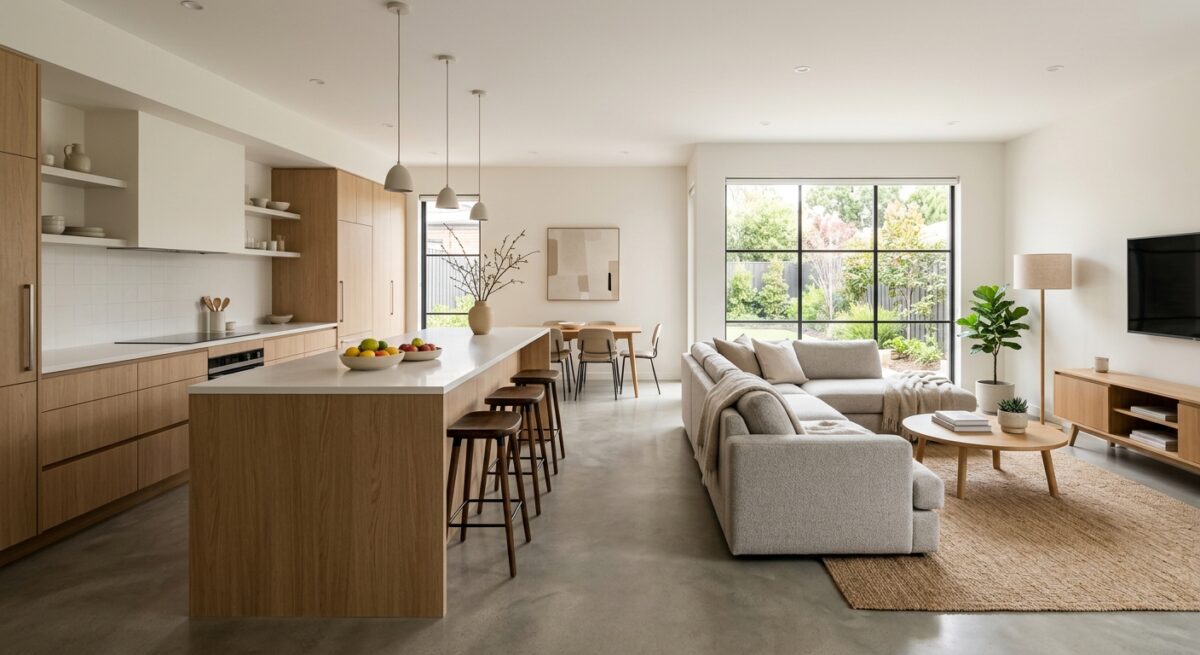
Open-plan living has become the defining feature of Melbourne’s modern homes — and for good reason. When done well, it creates a sense of space, connection, and light that completely transforms how a family lives. Suddenly, the cook isn’t isolated from the conversation, kids can do homework while dinner simmers, and weekend gatherings flow naturally from kitchen to lounge to garden.
But getting it right takes more than just knocking down a wall. From structural considerations to zoning, lighting, materials, and acoustics, every decision shapes how the space feels day to day. Here are TDEG’s top design tips for creating an open-plan living space that truly works in a Melbourne home.
1. Start With a Structural Assessment
Before removing any walls, you need to know which are load-bearing. This isn’t a guessing game — it requires input from a qualified structural engineer and proper documentation from a building designer. Skipping this step can be dangerous, expensive, and in some cases, completely derail a renovation halfway through.
At TDEG, we always begin open-plan projects with a thorough structural assessment as part of the drafting process. We identify which walls are supporting the roof or upper floor, determine whether beams or steel posts are needed, and document everything for council and your builder. It’s the unglamorous but essential foundation of a successful open-plan transformation.
2. Zone Your Space Intentionally
Open-plan doesn’t mean one big undefined room. The best open-plan spaces use furniture placement, rugs, ceiling heights, joinery, and lighting to create distinct zones — kitchen, dining, living — that feel connected but each have their own purpose.
Try anchoring the lounge with a large rug, dropping a pendant cluster over the dining table, or using a kitchen island as a natural divider. Subtle changes in floor finish, a partial bulkhead, or a built-in bookshelf can also define areas without closing them off. Done well, zoning makes a single room feel like three, with each zone working hard for the way your family actually lives.
3. Get the Lighting Right — Natural and Artificial
Melbourne’s cool, overcast winters mean natural light is precious. Where possible, orient living zones to capture northern light, and consider strategic skylights above the kitchen or dining area to flood the space with daylight even on grey days. Floor-to-ceiling windows or stacking doors opening to the garden can also transform how light moves through the home.
Artificial lighting should be layered — ambient for general illumination, task over benches and reading nooks, and accent lighting to highlight artwork, joinery, or architectural features. Putting different layers on separate switches and dimmers gives you complete control over mood. Lighting layout is a core part of TDEG’s interior design process, because lighting can make or break an open-plan space.
4. Choose a Material Palette That Flows
In an open-plan space, visual consistency matters far more than it does in separate rooms. Your eye travels uninterrupted from kitchen cabinetry to dining furniture to lounge upholstery, so any clash is immediately obvious. A cohesive palette — flooring, cabinetry, benchtops, walls, and soft furnishings — pulls the whole space together.
In Melbourne’s contemporary and modern Hamptons interiors, we often work with warm neutral tones: natural stone benchtops, oak or spotted gum flooring, soft off-white walls, and accents of brushed brass or matte black. The trick is to repeat materials and tones across zones — for instance, echoing kitchen timber in the living room shelving — so the eye reads the space as one considered whole.
5. Don’t Forget Acoustics and Privacy
One of the most overlooked aspects of open-plan living is sound. Without walls to absorb noise, a tiled kitchen and a TV-blaring lounge can quickly become a chaotic echo chamber — especially in homes with polished concrete or hardwood floors, stone benchtops, and large glass surfaces.
Manage acoustics with generous rugs, upholstered furniture, heavy curtains, and even discreet acoustic panels integrated into ceilings or joinery. It’s also worth remembering that open-plan isn’t for everyone — most households still benefit from at least one enclosed retreat, whether that’s a separate study, a snug, or a media room where someone can read, work, or watch a movie in peace.
6. Get Proper Plans Before You Start
Open-plan renovations almost always require a building permit, particularly when structural walls are involved. Trying to shortcut the documentation stage tends to cause delays, cost overruns, and frustrating back-and-forth with council and trades during construction.
TDEG prepares full documentation — measured floor plans, structural drawings, electrical and lighting layouts, and council submissions — so your project runs smoothly from approval through to completion. We also offer photorealistic 3D renders, which let you walk through your new open-plan space before a single wall comes down. It’s the difference between hoping the space will work and knowing it will.
Ready to Open Up Your Home?
TDEG’s team of designers and draftspeople are based in Melbourne and love helping families transform their homes into light-filled, connected spaces. Book a free 30-minute consultation to talk through your ideas.